Filters
Question type

Study Flashcards

One characteristic of the monomers that form condensation polymers that is not common in monomers which form addition polymers is


A) the presence of pi bonds.
B) the presence of two functional groups.
C) the presence of alkyl side chains.
D) the ability to form free radicals.
E) the presence of sulfur atoms.

F) A) and B)
G) A) and C)

Correct Answer

verifed

verified

The reaction of bromine with an alkene such as cyclopentene is a good laboratory test for the presence of a double bond in a compound. What type of reaction is it? The reaction of bromine with an alkene such as cyclopentene is a good laboratory test for the presence of a double bond in a compound. What type of reaction is it?   A) Addition B) Elimination C) Substitution D) Displacement E) Reduction


A) Addition
B) Elimination
C) Substitution
D) Displacement
E) Reduction

F) A) and E)
G) A) and B)

Correct Answer

verifed

verified

Identify the two principal products of the reaction between ammonia and ethyl propionate. Identify the two principal products of the reaction between ammonia and ethyl propionate.   A) A B) B C) C D) D E) None of these choices are correct.


A) A
B) B
C) C
D) D
E) None of these choices are correct.

F) D) and E)
G) B) and E)

Correct Answer

verifed

verified

Esters can be formed by the dehydration-condensation of a carboxylic acid and an alcohol.

A) True
B) False

Correct Answer

verifed

verified

Select the correct type for the following reaction. Select the correct type for the following reaction.   A) Addition B) Elimination C) Substitution D) Oxidation E) Dehydrogenation


A) Addition
B) Elimination
C) Substitution
D) Oxidation
E) Dehydrogenation

F) All of the above
G) C) and D)

Correct Answer

verifed

verified

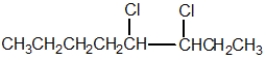
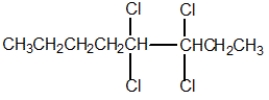
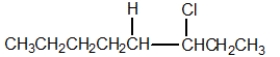
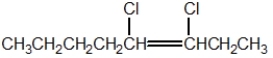
Identify the products of the reaction of 3-octene with chlorine. Identify the products of the reaction of 3-octene with chlorine.   A)    B)    C)    D)    E)


A) Identify the products of the reaction of 3-octene with chlorine.   A)    B)    C)    D)    E)
B) Identify the products of the reaction of 3-octene with chlorine.   A)    B)    C)    D)    E)
C) Identify the products of the reaction of 3-octene with chlorine.   A)    B)    C)    D)    E)
D) Identify the products of the reaction of 3-octene with chlorine.   A)    B)    C)    D)    E)
E) Identify the products of the reaction of 3-octene with chlorine.   A)    B)    C)    D)    E)

F) A) and B)
G) B) and C)

Correct Answer

verifed

verified

What is the difference between 1-butyne and 1-butene?


A) 1 carbon atom
B) 1 carbon atom and 2 hydrogen atoms
C) 2 hydrogen atoms
D) 4 hydrogen atoms
E) 1 carbon atom and 4 hydrogen atoms

F) A) and B)
G) A) and C)

Correct Answer

verifed

verified

Tartaric acid, shown below, is a dihydroxycarboxylic acid. How many chiral centers does it possess? Tartaric acid, shown below, is a dihydroxycarboxylic acid. How many chiral centers does it possess?   A) 0 B) 1 C) 2 D) 3 E) 4


A) 0
B) 1
C) 2
D) 3
E) 4

F) A) and B)
G) B) and E)

Correct Answer

verifed

verified

Secondary amines have the general formula RNH2.

A) True
B) False

Correct Answer

verifed

verified

Which of the following is not a constitutional isomer of CH3CH2COOH?


A) CH 3CH 2COOCH 3
B) CH 3COOCH 3
C) CH 3COCH 2OH
D) HOCH=CHOCH 3
E) CH 3CH(OH) CHO

F) A) and C)
G) All of the above

Correct Answer

verifed

verified

Including cyclic compounds, how many possible isomers exist for C4H8?


A) 2
B) 4
C) 5
D) 6
E) 7

F) A) and C)
G) A) and B)

Correct Answer

verifed

verified

Because organic compounds are associated with living organisms, their properties are governed by fundamentally different chemical principles from those of inorganic compounds.

A) True
B) False

Correct Answer

verifed

verified

The most abundant organic chemical on earth is


A) glycogen.
B) starch.
C) cellulose.
D) glucose.
E) carbonate.

F) B) and C)
G) B) and E)

Correct Answer

verifed

verified

The millipede ejects the compound shown below to protect itself from its enemies. Identify the functional group circled. The millipede ejects the compound shown below to protect itself from its enemies. Identify the functional group circled.   A) Nitrile B) Alcohol C) Amide D) Amine E) Nitro


A) Nitrile
B) Alcohol
C) Amide
D) Amine
E) Nitro

F) A) and E)
G) A) and D)

Correct Answer

verifed

verified

Amygdalin (Laetrile) was once touted for its potential anticancer activity. However, the claims were never scientifically verified. Identify the functional group circled. Amygdalin (Laetrile)  was once touted for its potential anticancer activity. However, the claims were never scientifically verified. Identify the functional group circled.   A) Carbonite B) Ether C) Amide D) Amine E) Nitrile


A) Carbonite
B) Ether
C) Amide
D) Amine
E) Nitrile

F) A) and B)
G) B) and D)

Correct Answer

verifed

verified

Nylon-type compounds are prepared by the reaction of


A) a diol with a diacid.
B) an alcohol with a diacid.
C) a diamine with a diacid.
D) an amine with a diacid.
E) a diamine with an acid.

F) B) and E)
G) A) and D)

Correct Answer

verifed

verified

Select the correct name for the following compound. Select the correct name for the following compound.   A) para-bromochloro-2-ethylbenzene B) 4-bromo-1-chloro-2-ethylbenzene C) 5-bromo-2-chloro-1-ethylbenzene D) 1-bromo-4-chloro-3-ethylcyclohexene E) 4-bromo-1-chloro-2-ethylcyclohexane


A) para-bromochloro-2-ethylbenzene
B) 4-bromo-1-chloro-2-ethylbenzene
C) 5-bromo-2-chloro-1-ethylbenzene
D) 1-bromo-4-chloro-3-ethylcyclohexene
E) 4-bromo-1-chloro-2-ethylcyclohexane

F) A) and B)
G) C) and D)

Correct Answer

verifed

verified

Vanillin is a flavoring agent which occurs naturally in the vanilla bean, the seed of an orchid. Identify the functional group circled. Vanillin is a flavoring agent which occurs naturally in the vanilla bean, the seed of an orchid. Identify the functional group circled.   A) Aldehyde B) Ketone C) Alcohol D) Carboxylic acid E) Carbonyl


A) Aldehyde
B) Ketone
C) Alcohol
D) Carboxylic acid
E) Carbonyl

F) A) and E)
G) C) and E)

Correct Answer

verifed

verified

Identify the organic product when cyclopentanol reacts with sulfuric acid. Identify the organic product when cyclopentanol reacts with sulfuric acid.   A) A B) B C) C D) D E) None of these choices are correct.


A) A
B) B
C) C
D) D
E) None of these choices are correct.

F) C) and D)
G) None of the above

Correct Answer

verifed

verified

Which of the following is likely to be an aromatic compound?


A) C 6H 5Cl
B) C 6H 12
C) C 2H 4Cl 2
D) C 2H 2
E) C 4H 8

F) A) and E)
G) D) and E)

Correct Answer

verifed

verified

Showing 81 - 100 of 107

Related Exams

Show Answer