A) 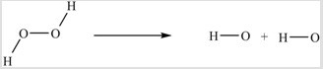
B) 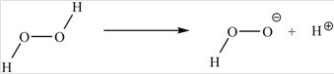
C) 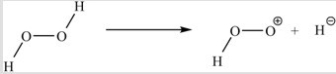
D) 
E) 
G) B) and D)
Correct Answer

verified
Correct Answer
verified
A) an essential element in the human body.
B) toxic because it results in an increase in the production of ATP.
C) toxic because it binds to the sulfhydryl group in proteins and enzymes.
D) used in high concentrations in ancient cosmetics.
E) None of these choices is correct.
G) A) and E)
Correct Answer
verified
Correct Answer
verified
A) Si4-
B) C2-
C) C22-
D) CN-
E) C3-
G) C) and D)
Correct Answer
verified
Correct Answer
verified
B) False
Correct Answer
verified
Correct Answer
verified
A) Na-Cl
B) Br-Br
C) P-Cl
D) All of the choices are polar covalent bonds.
E) None of these choices is a polar covalent bond.
G) B) and E)
Correct Answer
verified
Correct Answer
verified
A) isotopes.
B) allotropes.
C) polymorphs.
D) alloys.
E) amphoterism.
G) A) and C)
Correct Answer
verified
Correct Answer
verified
B) False
Correct Answer
verified
Correct Answer
verified
A) Fe
B) H
C) K
D) P
E) O
G) All of the above
Correct Answer
verified
Correct Answer
verified
A) LiH
B) NaH
C) CH4
D) NH3
E) RbH
G) A) and C)
Correct Answer
verified
Correct Answer
verified
A) a strong acid.
B) a strong base.
C) amphoteric.
D) a strong reducing agent.
E) a strong oxidizing agent.
G) A) and E)
Correct Answer
verified
Correct Answer
verified
A) electrolysis of carbon tetrachloride.
B) oxidation of chloride ion with F2(g) .
C) electrolysis of NaCl(aq) .
D) oxidation of chloride ion with Br2(aq) .
E) electrolysis of AlCl3(aq) .
G) B) and C)
Correct Answer
verified
Correct Answer
verified
A) in the manufacture of steel.
B) in the synthesis of cryolite for aluminum production.
C) as an oxidizing agent.
D) as a disinfectant.
E) as a mouthwash.
G) A) and C)
Correct Answer
verified
Correct Answer
verified
A) ICl
B) ICl2
C) ICl3
D) I2 and Cl-
E) I and Cl2-
G) C) and D)
Correct Answer
verified
Correct Answer
verified
A) silver bromide ore.
B) seawater.
C) the Frasch process.
D) phosphate rock.
E) the Ostwald process.
G) B) and D)
Correct Answer
verified
Correct Answer
verified
A) +1
B) -1
C) 0
D) -2
E) +2
G) A) and C)
Correct Answer
verified
Correct Answer
verified
Correct Answer
verified
Correct Answer
verified
A) Hydrogen
B) Nitrogen
C) Carbon
D) Lithium
E) Helium
G) None of the above
Correct Answer
verified
Correct Answer
verified
A) Organo metal complex ions
B) Carbides
C) Carbonates
D) Oxides
E) Carbon cannot bond to metals.
G) A) and E)
Correct Answer
verified
Correct Answer
verified
B) False
Correct Answer
verified
Correct Answer
verified
A) Sulfur reacts with carbon to form a flammable liquid.
B) Sulfur reacts with fluorine to form an inert compound.
C) Sulfur reacts with oxygen to form a strongly acid oxide.
D) Sulfur reacts with hydrogen to form a pungent, foul-smelling gas.
E) In its solid elemental form, sulfur exists as an eight-membered ring.
G) A) and D)
Correct Answer
verified
Correct Answer
verified
Showing 101 - 120 of 121
Related Exams