A) The binding of oxygen to Fe2+ in the first heme pulls the iron ion into the porphyrin ring, decreasing the affinity for the second oxygen.
B) The binding of oxygen to Fe2+ in the first heme pushes the iron ion out of the porphyrin ring, decreasing the affinity for the second oxygen.
C) The binding of oxygen to Fe2+ in the first heme pulls the iron ion into the porphyrin ring, increasing the affinity for the second oxygen.
D) The binding of oxygen to Fe2+ in the first heme pushes the iron ion out of the porphyrin ring, increasing the affinity for the second oxygen.
E) Oxygen does not bind to deoxyhemoglobin.
G) B) and C)
Correct Answer

verified
Correct Answer
verified
A) polybutylene.
B) polyvinyl chloride..
C) polypropylene.
D) polystyrene.
E) polyethylene
G) A) and B)
Correct Answer
verified
Correct Answer
verified
A) are chiral.
B) contain an aromatic ring.
C) do not form dipolar ions.
D) contain sulfur.
E) cannot join with other amino acids to form peptides.
G) B) and C)
Correct Answer
verified
Correct Answer
verified
B) False
Correct Answer
verified
Correct Answer
verified
A) a polysaccharide.
B) a saturated ester of glycerol.
C) one of the units making up a nucleic acid.
D) a polymer of amino acids.
E) an aromatic hydrocarbon.
G) A) and D)
Correct Answer
verified
Correct Answer
verified
A) phosphate units only.
B) phosphate and sugar units.
C) polyester.
D) phosphate, sugar, and nitrogen base units.
E) sugar units only.
G) B) and D)
Correct Answer
verified
Correct Answer
verified
A) acetic acid
B) glucose
C) adenine
D) ribose
E) water
G) A) and C)
Correct Answer
verified
Correct Answer
verified
A) deoxyribose and thymine
B) ribose and deoxyribose
C) ribose and uracil
D) uracil and thymine
E) ribose and thymine
G) A) and B)
Correct Answer
verified
Correct Answer
verified
A) temporarily lost part or all of its secondary or tertiary structure.
B) temporarily lost part or all of its primary structure.
C) been genetically modified due to errors in the nucleotides in the parent DNA.
D) temporarily lost its amino acid residues.
E) temporarily lost the hydrogen bonding between nitrogenous bases.
G) None of the above
Correct Answer
verified
Correct Answer
verified
A) are relatively inelastic.
B) never occur in nature.
C) produce structurally weak materials.
D) contain no peptide bonds.
E) are not involved in hydrogen bonds.
G) A) and D)
Correct Answer
verified
Correct Answer
verified
A) carboxylic acids and alkenes.
B) amines and alcohols.
C) alcohols and carboxylic acids.
D) amines and carboxylic acids..
E) alkenes and amines.
G) None of the above
Correct Answer
verified
Correct Answer
verified
B) False
Correct Answer
verified
Correct Answer
verified
A) amide.
B) carboxylic acid.
C) amine.
D) amino acid.
E) dipeptide.
G) A) and B)
Correct Answer
verified
Correct Answer
verified
B) False
Correct Answer
verified
Correct Answer
verified
A) polyamide
B) polyester
C) polyether
D) polyolefin
E) polyethylene
G) All of the above
Correct Answer
verified
Correct Answer
verified
A) 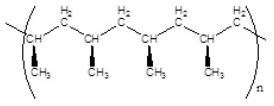
B) 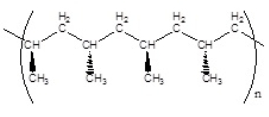
C) 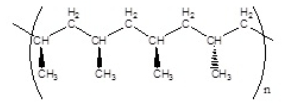
D) 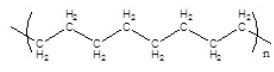
F) B) and C)
Correct Answer
verified
Correct Answer
verified
A) Styrene-butadiene
B) polyvinyl chloride
C) polypropylene
D) poly-cis-isoprene
E) polyethylene
G) None of the above
Correct Answer
verified
Correct Answer
verified
A) 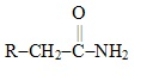
B) R-CH2-NH2
C) 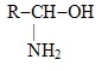
D) 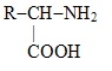
F) A) and B)
Correct Answer
verified
Correct Answer
verified
A) rubber.
B) nylon.
C) Tyvek.
D) polystyrene.
E) neoprene.
G) A) and C)
Correct Answer
verified
Correct Answer
verified
A) 
B) 
C) 
D) 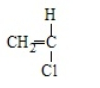
E) 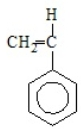
G) A) and D)
Correct Answer
verified
Correct Answer
verified
Showing 21 - 40 of 46
Related Exams