A) 2
B) 7
C) 8
D) 16
E) None of these choices is correct.
G) C) and D)
Correct Answer

verified
B
Correct Answer
verified
A) CuO(s) is the oxidizing agent and copper is reduced.
B) CuO(s) is the oxidizing agent and copper is oxidized.
C) CuO(s) is the reducing agent and copper is oxidized.
D) CuO(s) is the reducing agent and copper is reduced.
E) CuO(s) is the oxidizing agent and N2(g) is the reducing agent.
G) C) and E)
Correct Answer
verified
A
Correct Answer
verified
A) 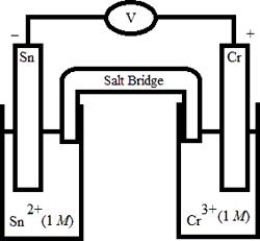
B) 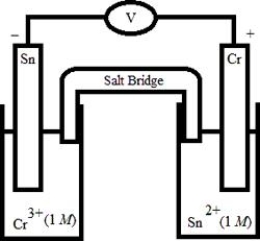
C) 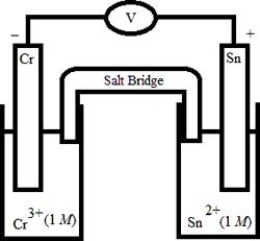
D) 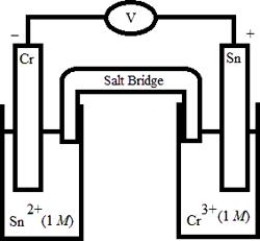
E) 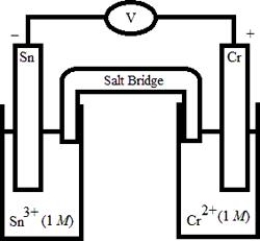
G) C) and E)
Correct Answer
verified
Correct Answer
verified
A) 1
B) 2
C) 3
D) 6
E) 12
G) All of the above
Correct Answer
verified
Correct Answer
verified
A) Ga
B) Zn
C) Cd
D) Hg
E) Pb
G) A) and C)
Correct Answer
verified
Correct Answer
verified
A) 1.
B) 2.
C) 3.
D) 5.
E) 6.
G) A) and B)
Correct Answer
verified
Correct Answer
verified
A) Cu(s) → Cu2+(aq) + 2e−
B) Cu2+(aq) + 2e−→ Cu(s)
C) Ag(s) → Ag+(aq) + e−
D) Ag+(aq) + e− → Ag(s)
E) Cu(s) + 2Ag+(aq) → Cu2+(aq) + 2Ag(s)
G) D) and E)
Correct Answer
verified
D
Correct Answer
verified
A) CuO and H2
B) H2 and CuO
C) CuO and Cu
D) H2O and H2
E) Cu and H2O
G) A) and E)
Correct Answer
verified
Correct Answer
verified
A) Al(OH) 4−(aq) + 4H+(aq) → Al3+(aq) + 4H2O(l)
B) C6H12O6(s) + 6O2(g) → 6CO2(g) + 6H2O(l)
C) Na6FeCl8(s) + 2Na(l) → 8NaCl(s) + Fe(s)
D) 2H2O2(aq) → 2H2O(l) + O2(g)
E) CO2(g) + H2(g) → CO(g) + H2O(g)
G) B) and C)
Correct Answer
verified
Correct Answer
verified
A) 5
B) 7
C) 14
D) 17
E) None of these choices is correct.
G) A) and E)
Correct Answer
verified
Correct Answer
verified
A) 1
B) 3
C) 4
D) 6
E) 8
G) A) and E)
Correct Answer
verified
Correct Answer
verified
A) Al(s) → Al3+(aq) + 3e−
B) Al3+(aq) + 3e− → Al(s)
C) Ni(s) → Ni2+(aq) + 2e−
D) Ni2+(aq) + 2e− → Ni(s)
E) Ni(s) + Ni2+(aq) → Al(s) + Al3+(aq)
G) A) and B)
Correct Answer
verified
Correct Answer
verified
A) aluminum does not react with oxygen gas.
B) a protective layer of aluminum oxide forms on the metal surface.
C) aluminum is harder to oxidize than iron.
D) iron gives cathodic protection to aluminum.
E) the electrical circuit cannot be completed on an aluminum surface.
G) B) and C)
Correct Answer
verified
Correct Answer
verified
A) 32
B) 25
C) 16
D) 13
E) 4
G) A) and C)
Correct Answer
verified
Correct Answer
verified
A) 1
B) 2
C) 4
D) 5
E) 10
G) B) and E)
Correct Answer
verified
Correct Answer
verified
A) Pb(s) + PbO2(s) + 4H+(aq) + 2SO42−(aq) → 2PbSO4(s) + 2H2O(l)
B) PbO2(s) + 4H+(aq) + 2SO42−(aq) + 2e− → PbSO4(s) + 2H2O(l)
C) Pb(s) + SO42-(aq) → PbSO4(s) + 2e−
D) Pb(s) → Pb(s) + 2e−
E) H2(g) → 2H+(aq) + 2e−
G) C) and D)
Correct Answer
verified
Correct Answer
verified
A) Pb(s) + PbO2(s) + 4H+(aq) + 2SO42-(aq) → 2PbSO4(s) + 2H2O(l)
B) PbO2(s) + 4H+(aq) + 2SO42−(aq) + 2e− → PbSO4(s) + 2H2O(l)
C) Pb(s) + SO42−(aq) → PbSO4(s) + 2e−
D) Pb(s) → Pb(s) + 2e−
E) H2(g) → 2H+(aq) + 2e−
G) A) and D)
Correct Answer
verified
Correct Answer
verified
A) HgO + 2e− → Hg + O2−
B) Zn2++ 2e− → Zn
C) Zn → Zn2+ + 2e−
D) ZnO + 2e− → Zn
F) A) and C)
Correct Answer
verified
Correct Answer
verified
A) 4, reactant side
B) 4, product side
C) 6, reactant side
D) 6, product side
E) 8, reactant side
G) C) and E)
Correct Answer
verified
Correct Answer
verified
A) Al(s) is oxidized and is the anode.
B) Al(s) is oxidized and is the cathode.
C) Cd(s) is oxidized and is the anode.
D) Cd(s) is oxidized and is the cathode.
E) No reaction occurs because E°cell < 0.
G) B) and C)
Correct Answer
verified
Correct Answer
verified
Showing 1 - 20 of 30
Related Exams