Filters
Question type

Study Flashcards

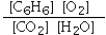
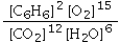
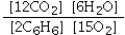
Which is the correct equilibrium constant expression for the following reaction? 2C6H6(g) + 15O2(g) Which is the correct equilibrium constant expression for the following reaction? 2C<sub>6</sub>H<sub>6</sub>(g) + 15O<sub>2</sub>(g)    12CO<sub>2</sub>(g) + 6H<sub>2</sub>O(g)  A)    B)    C)    D)    E)   12CO2(g) + 6H2O(g)


A) Which is the correct equilibrium constant expression for the following reaction? 2C<sub>6</sub>H<sub>6</sub>(g) + 15O<sub>2</sub>(g)    12CO<sub>2</sub>(g) + 6H<sub>2</sub>O(g)  A)    B)    C)    D)    E)
B) Which is the correct equilibrium constant expression for the following reaction? 2C<sub>6</sub>H<sub>6</sub>(g) + 15O<sub>2</sub>(g)    12CO<sub>2</sub>(g) + 6H<sub>2</sub>O(g)  A)    B)    C)    D)    E)
C) Which is the correct equilibrium constant expression for the following reaction? 2C<sub>6</sub>H<sub>6</sub>(g) + 15O<sub>2</sub>(g)    12CO<sub>2</sub>(g) + 6H<sub>2</sub>O(g)  A)    B)    C)    D)    E)
D) Which is the correct equilibrium constant expression for the following reaction? 2C<sub>6</sub>H<sub>6</sub>(g) + 15O<sub>2</sub>(g)    12CO<sub>2</sub>(g) + 6H<sub>2</sub>O(g)  A)    B)    C)    D)    E)
E) Which is the correct equilibrium constant expression for the following reaction? 2C<sub>6</sub>H<sub>6</sub>(g) + 15O<sub>2</sub>(g)    12CO<sub>2</sub>(g) + 6H<sub>2</sub>O(g)  A)    B)    C)    D)    E)

F) All of the above
G) C) and D)

Correct Answer

verifed

verified

At 400ºC,Kc = 64 for the equilibrium H2(g) + I2(g) At 400ºC,K<sub>c</sub> = 64 for the equilibrium H<sub>2</sub>(g) + I<sub>2</sub>(g)    2HI(g) .If 3.00 mol H<sub>2</sub> and 3.00 mol I<sub>2</sub> are introduced into an empty 4.0-L vessel,what is the equilibrium concentration of HI at 400ºC? A) 0.15 M B) 1.2 M C) 2.4 M D) 4.8 M E) 5.8 M 2HI(g) .If 3.00 mol H2 and 3.00 mol I2 are introduced into an empty 4.0-L vessel,what is the equilibrium concentration of HI at 400ºC?


A) 0.15 M
B) 1.2 M
C) 2.4 M
D) 4.8 M
E) 5.8 M

F) B) and D)
G) C) and E)

Correct Answer

verifed

verified

Which statement is correct?


A) If K < 1,lnK is negative,and ΔG° is negative then,the reaction is product favored.
B) If K > 1,lnK is negative,and ΔG° is positive,then the reaction is product favored.
C) If K > 1,lnK is positive,and ΔG° is negative,then the reaction is product favored.
D) If K > 1,lnK is negative,and ΔG° is negative,then the reaction is reactant favored.
E) If K < 1,lnK is positive,and ΔG° is positive,then the reaction is reactant favored.

F) B) and C)
G) C) and D)

Correct Answer

verifed

verified

When the substances in the equation below are at equilibrium,at pressure,P,and temperature, T,the equilibrium can be shifted to favor the products by CuO(s) + H2(g) When the substances in the equation below are at equilibrium,at pressure,P,and temperature, T,the equilibrium can be shifted to favor the products by CuO(s) + H<sub>2</sub>(g)    H<sub>2</sub>O(g) + Cu(s) ΔHº<sub>rxn</sub> = -2.0 kJ/mol A) increasing the pressure by means of a moving piston at constant T. B) increasing the pressure by adding an inert gas such as nitrogen. C) decreasing the temperature. D) allowing some gases to escape at constant P and T. E) adding a more copper. H2O(g) + Cu(s) ΔHºrxn = -2.0 kJ/mol


A) increasing the pressure by means of a moving piston at constant T.
B) increasing the pressure by adding an inert gas such as nitrogen.
C) decreasing the temperature.
D) allowing some gases to escape at constant P and T.
E) adding a more copper.

F) A) and B)
G) A) and C)

Correct Answer

verifed

verified

C

If one starts with pure NO2(g) at a pressure of 0.500 atm,the total pressure inside the reaction vessel when 2NO2(g) If one starts with pure NO<sub>2</sub>(g) at a pressure of 0.500 atm,the total pressure inside the reaction vessel when 2NO<sub>2</sub>(g)    2NO(g) + O<sub>2</sub>(g) reaches equilibrium is 0.674 atm. What is the equilibrium partial pressure of NO<sub>2</sub>? A) 0.152 atm B) 0.174 atm C) 0.200 atm D) 0.326 atm E) 0.500 atm 2NO(g) + O2(g) reaches equilibrium is 0.674 atm. What is the equilibrium partial pressure of NO2?


A) 0.152 atm
B) 0.174 atm
C) 0.200 atm
D) 0.326 atm
E) 0.500 atm

F) A) and B)
G) B) and C)

Correct Answer

verifed

verified

Consider the equilibrium equation C(s)+ O2(g)

Correct Answer

verifed

verified

blured image CO2(g),where ΔHrxn = -393.5 kJ/mo...

View Answer

What is the expression for KP for the following reaction? A(g) What is the expression for K<sub>P</sub> for the following reaction? A(g)    B(g) + 2C(g)  A) K<sub>P</sub> =P<sub>B</sub> (P<sub>C</sub>) <sup>2</sup><sub>/</sub>P<sub>A</sub> B) K<sub>P</sub> =P<sub>A</sub> P<sub>B</sub> <sub>/</sub> (P<sub>C</sub>) 2 C) K<sub>P</sub> =P<sub>C</sub> (P<sub>B</sub>) <sup>2</sup><sub>/</sub> P<sub>A</sub> D) K<sub>P</sub> =(P<sub>A</sub>) <sup>2</sup>/P<sub>A</sub> E) K<sub>P</sub> =(P<sub>A</sub>) <sup>2</sup>/P<sub>B</sub> B(g) + 2C(g)


A) KP =PB (PC) 2/PA
B) KP =PA PB / (PC) 2
C) KP =PC (PB) 2/ PA
D) KP =(PA) 2/PA
E) KP =(PA) 2/PB

F) A) and C)
G) A) and B)

Correct Answer

verifed

verified

Compounds A,B,and C react according to the following equation. 3A(g) + 2B(g) Compounds A,B,and C react according to the following equation. 3A(g) + 2B(g)    2C(g)  At 100°C a mixture of these gases at equilibrium showed that [A] = 0.855 M,[B] = 1.23 M,and [C] = 1.75 M.What is the value of K<sub>c</sub> for this reaction? A) 0.309 B) 0.601 C) 1.66 D) 2.25 E) 3.24 2C(g) At 100°C a mixture of these gases at equilibrium showed that [A] = 0.855 M,[B] = 1.23 M,and [C] = 1.75 M.What is the value of Kc for this reaction?


A) 0.309
B) 0.601
C) 1.66
D) 2.25
E) 3.24

F) B) and E)
G) C) and D)

Correct Answer

verifed

verified

E

Suppose 15.00 g of solid ammonium hydrogen sulfide is introduced into a 500.-mL flask at 25°C,the flask is sealed,and the system is allowed to reach equilibrium.What is the partial pressure of ammonia in this flask if KP = 0.108 at 25°C for the following reaction? NH4HS(s) Suppose 15.00 g of solid ammonium hydrogen sulfide is introduced into a 500.-mL flask at 25°C,the flask is sealed,and the system is allowed to reach equilibrium.What is the partial pressure of ammonia in this flask if K<sub>P</sub> = 0.108 at 25°C for the following reaction? NH<sub>4</sub>HS(s)    NH<sub>3</sub>(g) + H<sub>2</sub>S(g)  A) 0.657 atm B) 1.25 atm C) 0.329 atm D) 14.4 atm E) 2.50 atm NH3(g) + H2S(g)


A) 0.657 atm
B) 1.25 atm
C) 0.329 atm
D) 14.4 atm
E) 2.50 atm

F) A) and E)
G) All of the above

Correct Answer

verifed

verified

For the endothermic reaction A2(g) For the endothermic reaction A<sub>2</sub>(g)    2A(g) ,a snapshot of an equilibrium mixture of A(g) and A<sub>2</sub>(g) may look as follows.(Each circle represents 1.0 mol of A atoms,and the volume of the box is 1.0 L.)    What is the equilibrium constant K<sub>P</sub> for this reaction at 298 K? (R = 0.08206 L • atm/K • mol)  A) 1.3 ×10<sup>2</sup> B) 65 C) 0.22 D) 16 E) 5.33 2A(g) ,a snapshot of an equilibrium mixture of A(g) and A2(g) may look as follows.(Each circle represents 1.0 mol of A atoms,and the volume of the box is 1.0 L.) For the endothermic reaction A<sub>2</sub>(g)    2A(g) ,a snapshot of an equilibrium mixture of A(g) and A<sub>2</sub>(g) may look as follows.(Each circle represents 1.0 mol of A atoms,and the volume of the box is 1.0 L.)    What is the equilibrium constant K<sub>P</sub> for this reaction at 298 K? (R = 0.08206 L • atm/K • mol)  A) 1.3 ×10<sup>2</sup> B) 65 C) 0.22 D) 16 E) 5.33 What is the equilibrium constant KP for this reaction at 298 K? (R = 0.08206 L • atm/K • mol)


A) 1.3 ×10²
B) 65
C) 0.22
D) 16
E) 5.33

F) None of the above
G) A) and B)

Correct Answer

verifed

verified

Phosgene,COCl2,a poisonous gas,decomposes as follows. COCl2(g) Phosgene,COCl<sub>2</sub>,a poisonous gas,decomposes as follows. COCl<sub>2</sub>(g)    CO(g) + Cl<sub>2</sub>(g) . At 900.ºC,K<sub>c</sub> = 0.083.What is KP at this temperature? (R = 0.08206 L • atm/K • mol)  A) 0.125 B) 8.0 C) 6.1 D) 0.16 E) 0.083 CO(g) + Cl2(g) . At 900.ºC,Kc = 0.083.What is KP at this temperature? (R = 0.08206 L • atm/K • mol)


A) 0.125
B) 8.0
C) 6.1
D) 0.16
E) 0.083

F) A) and C)
G) A) and D)

Correct Answer

verifed

verified

The reaction system POBr3(g) The reaction system POBr<sub>3</sub>(g)    POBr(g) + Br<sub>2</sub>(g) is at equilibrium. Which of the following statements describes the behavior of the system if the partial pressure of bromine is reduced by 75% as equilibrium is established? A) POBr will be consumed as equilibrium is established. B) The partial pressure of POBr will decrease while the partial pressure of Br<sub>2</sub> increases as equilibrium is established. C) POBr<sub>3</sub> will be consumed as equilibrium is established. D) The volume will have to decrease before equilibrium can be reestablished. E) Bromine will be generated as equilibrium is established. POBr(g) + Br2(g) is at equilibrium. Which of the following statements describes the behavior of the system if the partial pressure of bromine is reduced by 75% as equilibrium is established?


A) POBr will be consumed as equilibrium is established.
B) The partial pressure of POBr will decrease while the partial pressure of Br2 increases as equilibrium is established.
C) POBr3 will be consumed as equilibrium is established.
D) The volume will have to decrease before equilibrium can be reestablished.
E) Bromine will be generated as equilibrium is established.

F) A) and B)
G) C) and E)

Correct Answer

verifed

verified

For the reaction SO2(g) + NO2(g) For the reaction SO<sub>2</sub>(g) + NO<sub>2</sub>(g)    SO<sub>3</sub>(g) + NO(g) ,the equilibrium constant K<sub>c</sub> is 18.0 at 1200ºC.If 1.0 mole of SO<sub>2</sub> and 2.0 moles of NO<sub>2</sub> are placed in a 20.0-L container,what concentration of SO<sub>3</sub> will be present at equilibrium? A) 0.048 mol/L B) 0.11 mol/L C) 0.95 mol/L D) 2.22 mol/L E) 18 mol/L SO3(g) + NO(g) ,the equilibrium constant Kc is 18.0 at 1200ºC.If 1.0 mole of SO2 and 2.0 moles of NO2 are placed in a 20.0-L container,what concentration of SO3 will be present at equilibrium?


A) 0.048 mol/L
B) 0.11 mol/L
C) 0.95 mol/L
D) 2.22 mol/L
E) 18 mol/L

F) A) and D)
G) C) and D)

Correct Answer

verifed

verified

Which of the following statements is incorrect regarding equilibrium?


A) Chemical equilibrium is a reversible process with no net change in concentrations of the products and reactants.
B) Physical equilibrium cannot exist between phases.
C) A chemical equilibrium with all reactants and products in the same phase is homogeneous.
D) none of the.

E) All of the above
F) A) and D)

Correct Answer

verifed

verified

The equilibrium constant,Kc,for the reaction PCl3(g) + Cl2(g) The equilibrium constant,K<sub>c</sub>,for the reaction PCl<sub>3</sub>(g) + Cl<sub>2</sub>(g)    PCl<sub>5</sub>(g) is 49 at 230°C. If 0.70 mol of PCl<sub>3</sub> is added to 0.70 mol of Cl<sub>2</sub> in a 1.00-L reaction vessel at 230°C,what is the concentration of PCl<sub>3</sub> when equilibrium has been established? A) 0.049 M B) 0.11 M C) 0.35 M D) 0.59 M E) 0.83 M PCl5(g) is 49 at 230°C. If 0.70 mol of PCl3 is added to 0.70 mol of Cl2 in a 1.00-L reaction vessel at 230°C,what is the concentration of PCl3 when equilibrium has been established?


A) 0.049 M
B) 0.11 M
C) 0.35 M
D) 0.59 M
E) 0.83 M

F) C) and D)
G) A) and E)

Correct Answer

verifed

verified

The equilibrium constants (expressed in atm) for the chemical reaction N2(g) + O2(g) The equilibrium constants (expressed in atm) for the chemical reaction N<sub>2</sub>(g) + O<sub>2</sub>(g)    2NO(g) are K<sub>P</sub> = 1.1 × 10<sup>-3</sup> and 3.6 × 10<sup>-3</sup> at 2200 K and 2500 K,respectively. Which statement is true? A) The reaction is exothermic,ΔHº < 0. B) The partial pressure of NO(g) is less at 2200 K than at 2500 K. C) K<sub>P</sub> is less than K<sub>c</sub> by a factor of (RT) . D) The total pressure at 2200 K is the same as at 2500 K. E) Higher total pressure shifts the equilibrium to the left. 2NO(g) are KP = 1.1 × 10⁻³ and 3.6 × 10⁻³ at 2200 K and 2500 K,respectively. Which statement is true?


A) The reaction is exothermic,ΔHº < 0.
B) The partial pressure of NO(g) is less at 2200 K than at 2500 K.
C) KP is less than Kc by a factor of (RT) .
D) The total pressure at 2200 K is the same as at 2500 K.
E) Higher total pressure shifts the equilibrium to the left.

F) B) and E)
G) B) and D)

Correct Answer

verifed

verified

When a reaction system reaches equilibrium,the forward and reverse reactions stop.

A) True
B) False

Correct Answer

verifed

verified

a.State Le Châtelier's principle. b.The following reaction is at equilibrium in a closed container: 2Fe(OH)3(s) a.State Le Châtelier's principle. b.The following reaction is at equilibrium in a closed container: 2Fe(OH)<sub>3</sub>(s)   Fe<sub>2</sub>O<sub>3</sub>(s)+ 3H<sub>2</sub>O(g); ΔH°<sub>rxn</sub> > 0 What effects,if any,will the following actions have on the position of equilibrium? In each case, state the direction of any shift in equilibrium,and give your reasons in one sentence. (i)adding more Fe(OH)<sub>3</sub> (ii)raising the temperature (iii)adding a more water vapor a.If a stress is applied to a system at equilibrium,the equilibrium position shifts so as to reduce that stress. Fe2O3(s)+ 3H2O(g); ΔH°rxn > 0 What effects,if any,will the following actions have on the position of equilibrium? In each case, state the direction of any shift in equilibrium,and give your reasons in one sentence. (i)adding more Fe(OH)3 (ii)raising the temperature (iii)adding a more water vapor a.If a stress is applied to a system at equilibrium,the equilibrium position shifts so as to reduce that stress.

Correct Answer

verifed

verified

b.(i)No effect.Pure solids and liquids have constant concentration,regardless of total amount.(ii)The equilibrium will move in the endothermic direction,i.e.,more products will form.(iii)The equilibrium will move to the left,i.e.,more reactant will form.

What is used to explain the effect of a stress that has been applied to a system at equilibrium?

Correct Answer

verifed

verified

Le Châteli...

View Answer

Ammonium iodide dissociates reversibly to ammonia and hydrogen iodide. NH4I(s) Ammonium iodide dissociates reversibly to ammonia and hydrogen iodide. NH<sub>4</sub>I(s)    NH<sub>3</sub>(g) + HI(g)  At 400°C,K<sub>P</sub> = 0.215.Calculate the partial pressure of ammonia at equilibrium when a sufficient quantity of ammonium iodide is heated to 400°C. A) 0.103 atm B) 0.215 atm C) 0.232 atm D) 0.464 atm E) 2.00 atm NH3(g) + HI(g) At 400°C,KP = 0.215.Calculate the partial pressure of ammonia at equilibrium when a sufficient quantity of ammonium iodide is heated to 400°C.


A) 0.103 atm
B) 0.215 atm
C) 0.232 atm
D) 0.464 atm
E) 2.00 atm

F) A) and E)
G) None of the above

Correct Answer

verifed

verified

Showing 1 - 20 of 135

Related Exams

Show Answer