Filters
Question type

Study Flashcards

What mass of excess reactant remains at the end of the reaction if 90.0 g of SO2 are mixed with 100.0 g of O2? 2SO2 + O2 → 2SO3


A) 10.0 g
B) 12.5 g
C) 22.5 g
D) 55.0 g
E) 77.5 g

F) B) and E)
G) C) and D)

Correct Answer

verifed

verified

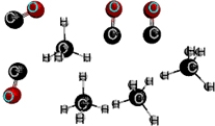
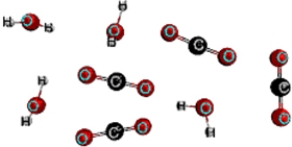
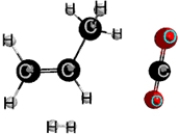
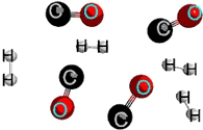
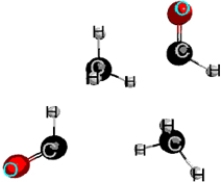
Which could represent the reaction mixture after the complete combustion of acetaldehyde,CH3CHO?


A) Which could represent the reaction mixture after the complete combustion of acetaldehyde,CH<sub>3</sub>CHO? A)    B)    C)    D)    E)
B) Which could represent the reaction mixture after the complete combustion of acetaldehyde,CH<sub>3</sub>CHO? A)    B)    C)    D)    E)
C) Which could represent the reaction mixture after the complete combustion of acetaldehyde,CH<sub>3</sub>CHO? A)    B)    C)    D)    E)
D) Which could represent the reaction mixture after the complete combustion of acetaldehyde,CH<sub>3</sub>CHO? A)    B)    C)    D)    E)
E) Which could represent the reaction mixture after the complete combustion of acetaldehyde,CH<sub>3</sub>CHO? A)    B)    C)    D)    E)

F) A) and B)
G) A) and C)

Correct Answer

verifed

verified

If 31.3 g of manganese(II) chloride,48.3 g of chlorine gas,and 25.7 g of water react to produce manganese(IV) oxide and hydrochloric acid,what is the limiting reactant and what mass of hydrochloric acid is produced?


A) manganese(II) chloride is the limiting reactant and 9.07 g of hydrochloric acid is produced
B) chlorine is the limiting reactant and 99.3 g of hydrochloric acid is produced
C) chlorine is the limiting reactant and 24.8 g of hydrochloric acid is produced
D) manganese(II) chloride is the limiting reactant and 36.3 g of hydrochloric acid is produced
E) water is the limiting reactant and 52.0 g of hydrochloric acid is produced

F) A) and C)
G) A) and E)

Correct Answer

verifed

verified

Calculate the formula mass of (NH4) 3AsO4.


A) 417.80 amu
B) 193.05 amu
C) 165.02 amu
D) 156.96 amu
E) 108.96 amu

F) A) and B)
G) A) and C)

Correct Answer

verifed

verified

What mass of nitrogen gas is required to react completely with excess hydrogen gas to produce 13.6 g of ammonia?


A) 11.2 g
B) 0.06 g
C) 22.4 g
D) 16.5 g
E) 44.8 g

F) A) and E)
G) B) and D)

Correct Answer

verifed

verified

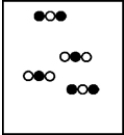
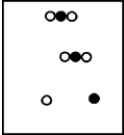
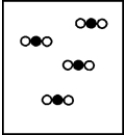
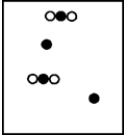
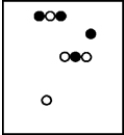
Suppose white atoms (W) and black atoms (B) react according to the following balanced chemical equation. 2W + B → BW2 If the initial reaction mixture is prepared as follows,what will the final reaction mixture be once the reaction is complete? Suppose white atoms (W) and black atoms (B) react according to the following balanced chemical equation. 2W + B → BW<sub>2</sub> If the initial reaction mixture is prepared as follows,what will the final reaction mixture be once the reaction is complete?   A)    B)    C)    D)    E)


A) Suppose white atoms (W) and black atoms (B) react according to the following balanced chemical equation. 2W + B → BW<sub>2</sub> If the initial reaction mixture is prepared as follows,what will the final reaction mixture be once the reaction is complete?   A)    B)    C)    D)    E)
B) Suppose white atoms (W) and black atoms (B) react according to the following balanced chemical equation. 2W + B → BW<sub>2</sub> If the initial reaction mixture is prepared as follows,what will the final reaction mixture be once the reaction is complete?   A)    B)    C)    D)    E)
C) Suppose white atoms (W) and black atoms (B) react according to the following balanced chemical equation. 2W + B → BW<sub>2</sub> If the initial reaction mixture is prepared as follows,what will the final reaction mixture be once the reaction is complete?   A)    B)    C)    D)    E)
D) Suppose white atoms (W) and black atoms (B) react according to the following balanced chemical equation. 2W + B → BW<sub>2</sub> If the initial reaction mixture is prepared as follows,what will the final reaction mixture be once the reaction is complete?   A)    B)    C)    D)    E)
E) Suppose white atoms (W) and black atoms (B) react according to the following balanced chemical equation. 2W + B → BW<sub>2</sub> If the initial reaction mixture is prepared as follows,what will the final reaction mixture be once the reaction is complete?   A)    B)    C)    D)    E)

F) A) and B)
G) D) and E)

Correct Answer

verifed

verified

Calculate the molar mass of Ca(BO2) 2·6H2O.


A) 273.87 g/mol
B) 233.80 g/mol
C) 183.79 g/mol
D) 174.89 g/mol
E) 143.71 g/mol

F) None of the above
G) A) and D)

Correct Answer

verifed

verified

The ______________ is the one component that is completely consumed during a chemical reaction.

Correct Answer

verifed

verified

Phosphorus pentachloride,a white solid that has a pungent,unpleasant odor,is used as a catalyst for certain organic reactions.Calculate the number of moles in 38.7 g of phosphorus pentachloride.


A) 5.38 mol
B) 3.55 mol
C) 0.583 mol
D) 0.282 mol
E) 0.186 mol

F) A) and D)
G) A) and E)

Correct Answer

verifed

verified

Balance the following equation: Ca3(PO4) 2(s) + SiO2(s) + C(s) → CaSiO3(s) + CO(g) + P4(s)


A) Ca3(PO4) 2(s) + 3SiO2(s) + 8C(s) → 3CaSiO3(s) + 8CO(g) + P4(s)
B) Ca3(PO4) 2(s) + 3SiO2(s) + 14C(s) → 3CaSiO3(s) + 14CO(g) + P4(s)
C) Ca3(PO4) 2(s) + 3SiO2(s) + 8C(s) → 3CaSiO3(s) + 8CO(g) + 2P4(s)
D) 2Ca3(PO4) 2(s) + 6SiO2(s) + 10C(s) → 6CaSiO3(s) + 10CO(g) + P4(s)
E) 2Ca3(PO4) 2(s) + 6SiO2(s) + 10C(s) → 6CaSiO3(s) + 10CO(g) + 4P4(s)

F) A) and B)
G) None of the above

Correct Answer

verifed

verified

What is the name given to the quantitative relationship between the substances that are consumed and produced in a chemical reaction?


A) Law of definite proportions
B) Law of molecular balance
C) Percent composition
D) Stoichiometry
E) Percent equivalency

F) B) and C)
G) A) and E)

Correct Answer

verifed

verified

Calculate the formula mass of rubidium carbonate,Rb2CO3.


A) 340.43 amu
B) 255.00 amu
C) 230.95 amu
D) 145.47 amu
E) 113.48 amu

F) C) and D)
G) All of the above

Correct Answer

verifed

verified

Phosphine,an extremely poisonous and highly reactive gas,reacts with oxygen gas to form tetraphosphorus decaoxide and water. PH3(g) + O2(g) → P4O10(s) + H2O(g) [unbalanced] Calculate the mass of P4O10(s) formed when 225 g of PH3 reacts with excess oxygen.


A) 1880 g
B) 940.g
C) 900.g
D) 470.g
E) 56.3 g

F) A) and B)
G) A) and C)

Correct Answer

verifed

verified

What mass of nitrogen gas is required to react completely with 2.79 g of hydrogen gas to produce ammonia?


A) 25.8 g
B) 12.9 g
C) 78.2 g
D) 38.7 g
E) 77.4 g

F) A) and B)
G) A) and C)

Correct Answer

verifed

verified

Once the following equation is balanced with the smallest set of whole number coefficients,what is the sum of the coefficients? (Don't forget to include coefficients of one.) ___ Cr + ___ H2SO4 → ___ Cr2(SO4) 3 + ___H2


A) 4
B) 9
C) 11
D) 13
E) 15

F) A) and E)
G) B) and E)

Correct Answer

verifed

verified

Ammonia reacts with diatomic oxygen to form nitric oxide and water vapor as follows: 4NH3 + 5O2 → __________4NO + 6H2O What is the maximum amount of water that may be produced if 40.0 g NH3 and 50.0 g O2 are mixed and allowed to react?


A) 1.56mol
B) 1.88 mol
C) 3.52 mol
D) 3.91 mol
E) 2.35 mol

F) B) and E)
G) C) and E)

Correct Answer

verifed

verified

The empirical formula of C6H6 is CH.

A) True
B) False

Correct Answer

verifed

verified

What is the mass,in grams,of one arsenic atom? (NA = 6.022 × 10²³ mol-1)


A) 5.48 × 10⁻²³ g
B) 33.0 g
C) 74.9 g
D) 1.24 × 10⁻²² g
E) 8.04 × 10²¹ g

F) None of the above
G) A) and B)

Correct Answer

verifed

verified

Once the following equation is balanced with the smallest set of whole number coefficients,what is the sum of the coefficients? (Don't forget to include coefficients of one.) ___ Al + ___ H2SO4 → ___ Al2(SO4) 3 + ___ H2


A) 3
B) 5
C) 6
D) 9
E) 12

F) None of the above
G) B) and E)

Correct Answer

verifed

verified

Determine the number of ammonia molecules in 4.85 g of ammonia.(NA = 6.022 × 10²³ mol-1)


A) 2.92 × 10²³ molecules
B) 4.73 × 10⁻²⁵ molecules
C) 1.24 × 10²³ molecules
D) 5.83 × 10⁻²⁴ molecules
E) 1.71 × 10²³ molecules

F) A) and B)
G) A) and C)

Correct Answer

verifed

verified

Showing 101 - 120 of 131

Related Exams

Show Answer